

Choosing a Denver neighborhood when you have kids in the picture is genuinely overwhelming. You are trying to balance school access, park space, walkability, commute needs, and the kind of community feel that makes everyday life work, all at the same time. This list is built for families who need more than a popular name. It is for buyers who want a neighborhood that fits real routines like school drop-offs, playground time, grocery runs, and weekend outings.
Denver has a lot going for it as a family city. The public school system is large, and the city maintains more than 280 urban parks. But neighborhood fit varies significantly from one part of the city to another, so a city-wide reputation only tells part of the story. School access in particular should always be verified by your exact address through Denver Public Schools, especially since some areas use enrollment zones and boundary updates are ongoing.
The neighborhoods below start with options that offer the clearest mix of schools, parks, and everyday convenience, then move into areas that may fit more specific family lifestyles.
Washington Park for the Classic Denver Family Lifestyle
Washington Park tends to be the neighborhood families use as a measuring stick. When buyers start comparing Denver neighborhoods, Wash Park almost always comes up first, and for good reason. The combination of what it offers in one place is genuinely hard to match anywhere else in the city.
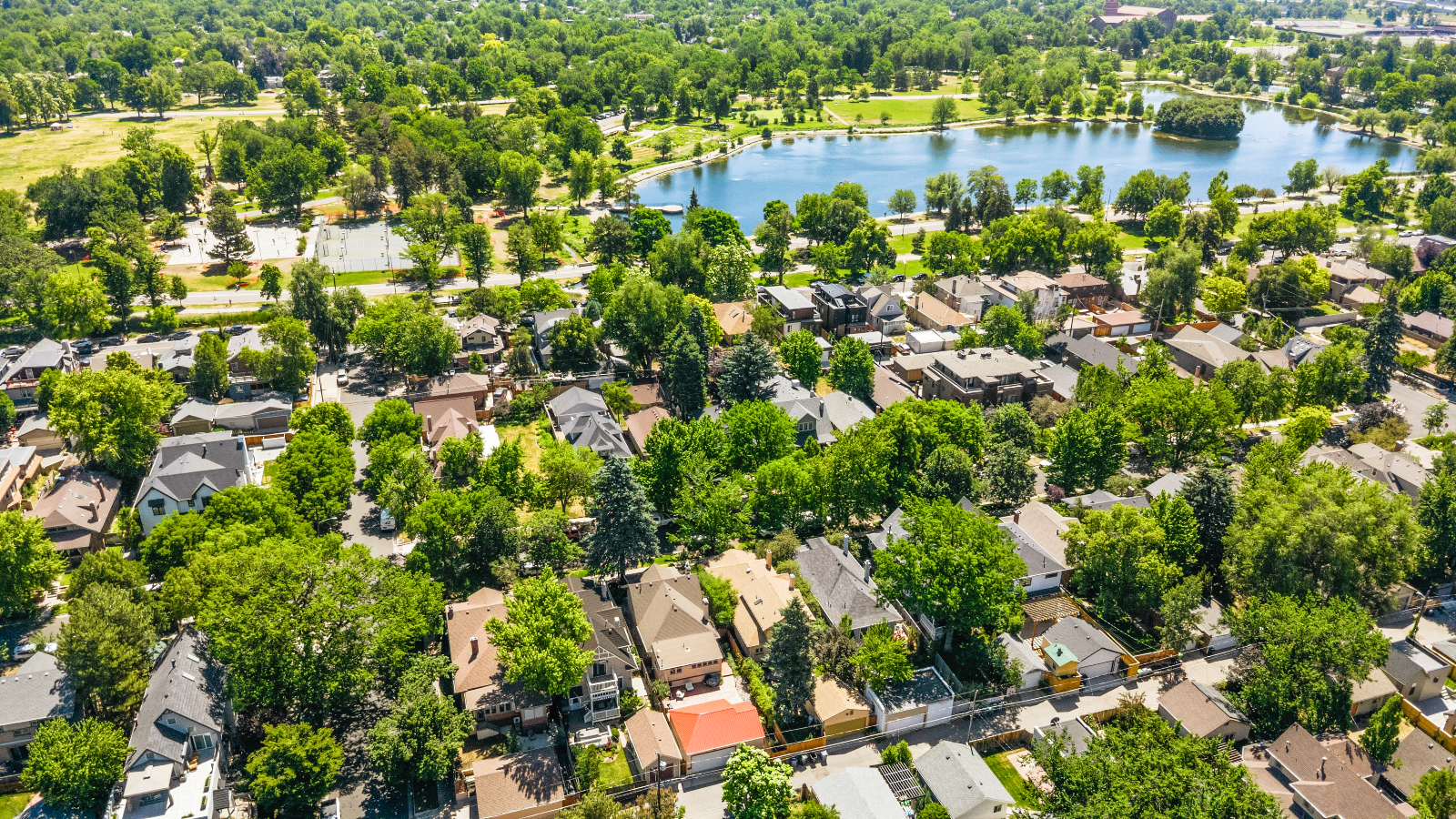
The park itself spans 160 acres and sits right in the heart of the neighborhood. Wide, stroller-friendly paths loop around two lakes, open lawns give kids room to run, and there are dedicated spaces for sports, picnics, and weekend gatherings that draw families out consistently. The park is not just green space on a map. It is woven into how residents spend their time week to week.
Beyond the park, the neighborhood has two commercial pockets that families rely on regularly. South Gaylord Street is a walkable strip with local shops, restaurants, and a relaxed, neighborhood-specific feel. South Pearl Street adds more dining and retail options and hosts a popular farmers market during warmer months. Both areas are close enough that running errands or grabbing dinner rarely requires getting on a highway.
School access is another reason families prioritize this area. Steele Elementary is one of the more sought-after options connected to the Washington Park area and consistently draws attention from parents doing their homework on Denver schools. That said, school assignments in Denver are address-based and subject to boundary changes, so any family serious about a specific school should verify current enrollment details directly through Denver Public Schools before making decisions based on proximity alone.
The tradeoff with Washington Park is straightforward. Homes here carry a premium, and that premium has held steady because demand from families stays strong. Washington Park fits best for buyers who want something established and central, a neighborhood with a recognizable identity that has been a family staple in Denver for decades. The infrastructure for family life, the park, the schools, the walkable retail, is already in place and working well.
Central Park for Newer Homes and Built-In Family Amenities
If you have been searching Denver neighborhoods and keep seeing the name Stapleton pop up in older listings or forum posts, know that the neighborhood is now officially called Central Park. The name change reflects a broader community effort, and current real estate listings, school documents, and city references all use Central Park as the correct name.
What makes Central Park stand out for families is that it was designed with them in mind from the start. Most of the housing stock is newer construction, which means open floor plans, energy-efficient builds, and layouts that actually work for households with kids. The neighborhood sits on the former Stapleton International Airport site, and the planned community development that replaced it brought a network of parks, trails, pools, and gathering spaces that feel genuinely usable rather than decorative. Residents describe the amenities and walking trails as numerous and the community feel as unparalleled.
The outdoor infrastructure here is substantial. Parks throughout the neighborhood are equipped with playgrounds, dog parks, and public pools, giving families multiple options within walking or biking distance. The 80-acre Central Park itself anchors the neighborhood, and the trail system connects many of the residential pockets, making it easy to get outside without needing to drive. Niche ranks Central Park #4 in Best Neighborhoods to Raise a Family in Denver, and with a population of 32,720, it has the density of a real neighborhood rather than a quiet suburb.
For families relocating from out of state, the practical setup here can be a real advantage. The Stanley Marketplace serves as a local hub for shopping, dining, and community events. The A Line commuter rail connects the neighborhood to Union Station downtown and Denver International Airport, which is genuinely useful for parents who travel for work or need airport access without a long drive.
Schools in Central Park fall under Denver Public Schools, but families should not assume a single straightforward school assignment. The neighborhood includes DPS enrollment zones, meaning school placement depends on your specific address, grade level, and available seats. Checking your address directly through the DPS school finder tool before buying is the most reliable way to understand your options.
Buyers who fit best here tend to be those who want newer construction, structured neighborhood amenities, and a family-forward environment without sacrificing city access. Central Park gives you the feel of a well-organized community where kids can ride bikes to school and neighbors actually know each other, while still keeping downtown Denver and the airport within a reasonable commute.
Berkeley for Walkability, Park Access, and a Relaxed Local Feel
Berkeley sits in a comfortable spot for families who want genuine neighborhood character without the structured, planned-out feel of a master-designed community. It has the kind of organic, lived-in quality that takes decades to develop, and that comes through in everything from the tree-lined streets to the mix of bungalows and craftsman-style homes that make up most of the housing stock.
Two parks anchor the neighborhood's outdoor appeal in a practical way. Berkeley Lake Park and Rocky Mountain Lake Park both give families a place to spend time outside without needing to drive anywhere. The CDC notes that people are more likely to walk or bike to parks or recreational facilities if they live nearby, and Berkeley's layout makes that easy. Both parks offer open space, walking paths, and room for kids to run around on a regular basis, not just on special occasions.
The walkability factor here goes beyond parks. Tennyson Street runs through the heart of the neighborhood and gives families a genuinely useful strip of local businesses - coffee shops, casual restaurants, independent bookstores, and spots that work well for a low-key family outing. Saturday mornings on Tennyson have a relaxed rhythm that feels very different from driving to a shopping center. For parents who want errands and weekend plans to feel less car-dependent, this street delivers that consistently.
Housing in Berkeley leans toward older Denver character rather than newer construction. Bungalows, ranch-style homes, and craftsman builds make up a good portion of the inventory, and that gives the neighborhood a visual consistency that newer developments rarely have. Lot sizes are reasonable, and the streets have a walkable scale that makes the whole area feel approachable on foot.
What makes Berkeley work well as a family neighborhood is how naturally its individual strengths combine. Having two parks within easy reach supports physical activity and social connection for kids, while Tennyson Street within walking distance means parents are not always relying on a car to get through the week. Buyers who want parks, walkability, and a neighborhood with real personality rather than a polished, pre-packaged feel will find that Berkeley checks those boxes without asking them to compromise on any one of them.
West Highland for Parents Who Want Urban Convenience Without Losing Neighborhood Charm
The naming situation in this part of Denver genuinely trips up a lot of buyers. Highland, Highlands, and West Highland get used interchangeably in casual conversation and even in some listings, but they are distinct neighborhoods. West Highland sits west of Federal Boulevard, while Highland is the area closer to downtown and LoHi. When you are comparing school assignments or calculating commute times, that distinction matters more than most people expect.
West Highland itself has a character that is hard to replicate in other parts of Denver. The streets are lined with Craftsman bungalows, Victorians, and modern townhomes, and the mix gives the neighborhood a texture that newer developments simply do not have. According to 5280, the neighborhood feels like a locals' neighborhood, which is exactly the kind of atmosphere that appeals to families who want to feel rooted somewhere rather than just settled.
The daily lifestyle here runs through 32nd Avenue and Lowell Boulevard, where you can get coffee, groceries, and dinner without getting in a car. Highland Square anchors a lot of that activity, bringing together restaurants, a Sunday farmers market in the summer, and a general sense of neighborhood energy that makes weekends feel easy. A Sprouts Farmers Market nearby and a bike lane along 35th Avenue add to the practical side of getting around without relying entirely on driving.
For families, the walkability is one of the strongest selling points. Running errands on foot, walking kids to a nearby spot for lunch, or spending a Saturday afternoon moving through the neighborhood without a specific destination all feel natural here. That kind of day-to-day ease is something that more car-dependent neighborhoods simply cannot offer, and for parents managing busy schedules, it genuinely reduces friction.
The tradeoff worth knowing upfront is that West Highland does not offer the large yards or sprawling floor plans that more suburban-feeling parts of Denver provide. Lot sizes tend to be smaller, and some of the townhomes in the area reflect a more compact urban layout. The 2025 average sale price sits at $978,623, which signals that buyers are paying close attention to what this neighborhood offers. Families drawn here tend to be the ones who want city energy and residential calm in the same place, and West Highland delivers that combination in a way that very few Denver neighborhoods can match.
South Park Hill for Families Focused on Schools and Easy Weekend Activities
South Park Hill has built a reputation as one of Denver's more dependable east side neighborhoods for families, and that reputation holds up when you look at what actually makes daily life work well here. According to 5280, South Park Hill ranks highest out of the trio for its stellar schools, with options like Denver School of the Arts, Odyssey School of Denver, and Park Hill Elementary drawing real attention from parents who care about where their kids spend their days.
That school focus is only part of the draw. The neighborhood sits right next to City Park, which gives families access to two of Denver's most visited cultural destinations without any real planning effort. The Denver Zoo and the Denver Museum of Nature and Science are both within the park, and having them this close to home makes a genuine difference for parents who want to keep kids engaged without a long drive. Those kinds of outings are easy to repeat throughout the year, which matters more than most buyers initially realize.
The residential character of South Park Hill also sets it apart. Residents value the area's relaxed, suburban feel and easy access to downtown, which is a combination that is genuinely hard to find this close to the city center. The streets are quieter, the lots are generous by Denver standards, and the overall pace feels calmer than some of the more commercially dense neighborhoods on the east side.
What keeps South Park Hill relevant beyond its park access is the sense of stability it carries. 5280 noted that both North Park Hill and South Park Hill earned high marks across the board in safety and location, which reflects what many families already feel when they spend time here. Commercial corridors along East Colfax and East 23rd Avenue, along with a smaller retail pocket on Oneida Street, give the neighborhood enough everyday convenience without overwhelming the residential feel.
Demand here has been growing steadily, and the average home sale price jumped nearly nine percent from 2024 to 2025. For families who prioritize a school-focused environment, cultural access, and a neighborhood that genuinely feels livable rather than just convenient, South Park Hill delivers a combination that is worth serious consideration on the east side of Denver.
City Park for Families Who Want a Big Park and Big City Perks
Few Denver neighborhoods put as much within walking distance as City Park. The park itself spans 320 acres and provides more than 13 miles of trails, two playgrounds, 10 sports fields, and 24 courts for tennis, handball, and horseshoes. That is a serious amount of outdoor space for a family to work with on any given morning.
What makes City Park stand out beyond the acreage is what sits inside it. The Denver Zoo and the Denver Museum of Nature and Science are both anchored within the park. For parents with young children, having two major cultural institutions within the same green space where kids can also run around and kick a ball is hard to replicate anywhere else in the city. You can spend the morning at the museum, grab lunch nearby along East Colfax, and still have time for the playground before heading home.
The neighborhood surrounding the park connects well to the broader city. Dedicated bike routes, bus service, and pedestrian paths link the area to adjacent neighborhoods and the rest of Denver, which matters for families who want urban convenience alongside their outdoor space. This is not a neighborhood where you trade city access for park access.
- Nearby dining and local spots along East Colfax and surrounding streets mean a full family day out does not require driving across town
- Dedicated bike routes and pedestrian paths connect City Park to adjacent neighborhoods and the broader city
- The Denver Zoo and Denver Museum of Nature and Science sit within the park itself, not just nearby
The tradeoff worth knowing upfront is that all of this comes at a price. Homes near City Park tend to reflect the demand that comes with the location and the amenities, so buyers should go in with realistic expectations about what the market looks like here. Buyers who want an urban setting without sacrificing meaningful outdoor time for their kids will find City Park genuinely hard to argue with. The combination of scale, kid-friendly attractions, and central location means the neighborhood covers recreation, culture, and convenience without requiring families to look elsewhere to fill those gaps.
Sloan's Lake for West Side Families Who Want Room to Breathe
Sloan's Lake sits on the west side of Denver and wraps itself around one of the city's most recognizable outdoor spaces. The park stretches across more than 177 acres, giving families a proper loop to walk, run, or bike with the lake as a backdrop and the mountains visible in the distance. It is the kind of outdoor anchor that genuinely shapes how residents use their time, not just on weekends but on regular weekday evenings when the light is good and kids need to burn some energy.
What makes this neighborhood stand out from a family lifestyle perspective is how naturally the park fits into daily routines. Dr. Pooja S. Tandon of the Trust for Public Land noted that the cadence of families' lives and the importance of daily contact with nature makes having a park near home genuinely vital. Sloan's Lake delivers exactly that. Families here do not have to plan a trip to get outside. The park is right there, and that kind of access changes how a neighborhood actually feels to live in day to day.
The surrounding area also has a lot going for it beyond the park. Edgewater sits just to the west and adds a layer of convenience with its own local dining scene and the Edgewater Public Market, which has become a go-to spot for casual family outings. The overall vibe in this part of Denver is a bit more low-key compared to some of the busier east side neighborhoods, which is part of the draw for families who want good city access without constant activity.
Families who find themselves comparing Sloan's Lake to Washington Park are often doing so for good reason. Both neighborhoods center their identity around a signature park and both offer strong community character. The difference is location and feel. Sloan's Lake pulls in buyers who specifically want west side access, whether that is for commuting reasons, proximity to family, or simply a preference for that part of the city. The neighborhood also tends to have a mix of older bungalows alongside newer infill development, which gives buyers some variety in what they can find at different price points.
Research from the Trust for Public Land found that areas within a 10-minute walk of a park can be as much as 6 degrees cooler than neighborhoods outside that range, which is a real practical benefit during Denver's warmer months. For families spending afternoons outside with kids, that kind of difference matters. Sloan's Lake gives buyers a neighborhood where the outdoor space is large enough to feel like an escape, close enough to feel like an extension of the backyard, and connected enough to the rest of Denver to keep daily life running smoothly.
Finding the Right Fit for Your Family
Every neighborhood on this list has something real to offer, but the right one depends entirely on what your household actually needs day to day. Washington Park and Central Park are strong starting points for families who want established amenities and a well-rounded setup from the moment they move in. Berkeley and West Highland suit buyers who want walkable streets and neighborhood character over polished new construction. South Park Hill and City Park are worth serious attention if school access and cultural enrichment sit near the top of your priorities. Sloan's Lake gives you a 177-acre park anchor on the west side alongside a community that does not feel rushed.
One thing worth repeating is that neighborhood reputation only gets you so far. School assignments in Denver are address-specific, and the only reliable way to know what your kids qualify for is to run your exact address through the Denver Public Schools finder tool before you commit to anything. Boundary updates happen, and what was true for a neighbor last year may not apply to your address today.
What this list really does is give you a practical framework for cutting through the noise. Instead of sorting through dozens of Denver neighborhoods based on price alone, you can now match each area against the things that will actually shape your family's routine. Start with the two or three neighborhoods that fit your priorities best, visit them at different times of day, and let your daily needs lead the decision from there. That approach makes the Denver home search feel a lot more manageable than trying to evaluate every option at once.
FAQs
What are the best family-friendly neighborhoods in Denver?
Some of the best family-friendly neighborhoods in Denver include Washington Park, Central Park, Berkeley, West Highland, South Park Hill, City Park, and Sloan's Lake. Each offers a different combination of highly rated schools, parks, walkable amenities, and community atmosphere, so the best choice depends on your family's priorities.
Which Denver neighborhoods have the best parks for families?
Washington Park, City Park, and Sloan's Lake are known for their large parks and outdoor recreation. Central Park also offers numerous neighborhood parks, playgrounds, trails, and community pools designed with families in mind.
What Denver neighborhoods have good schools?
Many families consider Washington Park, South Park Hill, and Central Park because of their access to sought-after schools. However, Denver Public Schools assigns schools based on enrollment zones and address, so it's important to verify school eligibility for any property before purchasing a home.
Is Central Park a good neighborhood for families?
Yes. Central Park is one of Denver's most popular neighborhoods for families thanks to its newer homes, extensive trail system, parks, pools, community events, and convenient access to downtown Denver and Denver International Airport.
Which Denver neighborhood is best if I want to walk to parks and restaurants?
Berkeley, Washington Park, and West Highland are excellent options for buyers looking for walkable neighborhoods. These areas combine neighborhood parks with local restaurants, coffee shops, boutiques, and farmers markets that make everyday living more convenient.
How do I choose the right Denver neighborhood for my family?
Start by identifying what's most important to your household, such as school options, commute times, outdoor recreation, walkability, or home style. Visiting neighborhoods at different times of day and working with a local Denver real estate expert can help you narrow your options and find the best fit.
Should I verify school boundaries before buying a home in Denver?
Yes. School enrollment boundaries and enrollment zones can change over time. Before purchasing a home, always confirm your assigned schools directly through Denver Public Schools to ensure the property aligns with your family's educational needs.
Check out this article next