

There's a moment I see pretty often during showings. A buyer walks into a finished basement or spots an open loft and immediately starts talking about what they'd put there. The home office. The media room. Maybe both. And I get it. The excitement is real.
But the listing label and the actual experience of working or watching a movie in that space? Those are two different conversations. I've walked through enough of these rooms to know that the ones worth getting excited about aren't always the ones with the nicest photos.
Here's how I actually think about evaluating them.
Key Takeaways
- Basement: Often the best fit for movie nights and strong sound separation, but check for dampness, musty air, and mechanical noise before you count on it for daily use.
- Open loft: Usually works better for casual overflow space than focused work, so test how sound carries before assuming it will handle calls well.
- Enclosed bonus room: Often the most flexible option for both work and entertainment, but check heating and cooling closely, especially if it sits above a garage.
What Makes a Room Fit for Work and Entertainment?
Before comparing room types, the most useful question is: which matters more to you, work or entertainment? They pull a space in different directions. A great home office wants natural light, quiet, and a clean backdrop. A great media room wants darkness, sound control, and comfortable seating. Getting both from the same space is possible, but it means making trade-offs.
Before you get too far into the labels, run a quick showing checklist:
- Try a normal conversation from another part of the house to see whether background voices may carry into your calls.
- Check where natural light hits the screen or desk setup and whether glare will be an issue.
- Measure for the furniture you actually want in the room, not just what looks good in listing photos.
- Locate outlets and confirm where your desk, TV, or router would realistically go.
- Test the Wi-Fi, knowing that it gives you a snapshot of the seller's setup, not a guarantee of your own. You can also check provider availability by address and ask whether the room has a wired connection nearby.
Here's what I look at when I'm walking through a flex space with a buyer:
Privacy and Sound Control
This one matters most if you're taking calls. The question isn't just whether the room is quiet. It's whether the rest of the house can hear you, and whether you can hear them.
Daylight and Glare Control
Natural light is great for working, but direct sun on a screen is not. During a showing, pay attention to which direction the windows face and what time of day you're visiting. A room that feels bright and airy at 10 a.m. might have harsh afternoon glare across your monitor by 3 p.m.
Comfort and Air Quality
This one tends to get skipped over, and it probably matters more than people realize when you're in a space for eight hours a day. Does the room have its own HVAC supply, or does it rely on a distant vent? Any mustiness, odors, or dampness? Ask the seller directly whether the space gets uncomfortable in summer or after snowmelt.
Internet and Electrical Access
The Wi-Fi in the main living area is often not the Wi-Fi in the basement or above the garage. Testing the signal in the room is useful, but it only tells you how the seller's equipment performs in that moment. Buyers can also check the FCC's National Broadband Map for provider availability by address and ask whether the room has access to a wired connection.
Layout and Storage
Can a desk, a couch, a screen, and some storage actually fit in a flex space without the room feeling like a game of Tetris? Measure it. Think about where the door swings, where the outlets are, and whether you'd need to rearrange everything every time you switched from work mode to movie mode.
Is a Basement the Best Fit for Work and Media?
A finished basement is often the first thing Denver buyers get excited about, and it's usually for good reason. The separation from the main living area is real. So is the ability to block out light and reduce ambient noise in ways that an upper-level room can't match.
That said, "finished" is a wide category. I've seen basements with tall ceilings, great natural light from a garden-level exposure, and their own HVAC zone. I've also seen basements where the finish is surface-level and the mechanical room shares a thin wall with the would-be office.
Where a Basement Performs Well
For a media room, a basement is often the strongest option in the house. Light control is easier, sound from the rest of the home stays upstairs, and below-grade space often helps with temperature and acoustics. If the room feels low or tight, measure it and confirm any applicable requirements with the building department for that specific address before you make plans around it.
Where a Basement Needs More Scrutiny
Moisture is the big one. Colorado winters are dry, which can mask issues that only show up in spring after snowmelt. I always ask sellers whether the space gets musty or damp seasonally, because a dehumidifier and a fresh coat of paint can hide a lot temporarily.
Radon is worth asking about too. If you plan to use the basement regularly, ask where the home was last tested. If the previous test was upstairs, consider testing the basement during your inspection period.
Is a Loft the Best Fit for Work and Media?
Here's the honest version: most open lofts are not set up well for private work or immersive entertainment. That doesn't mean they're useless. It just means buyers need to be realistic about what they're actually getting.
The core issue is that an open loft has no door. Sound travels freely in both directions. The noise from your household reaches your call. Your call reaches the bedrooms.
Where a Loft Performs Well
Where lofts genuinely shine is informal, low-pressure use. A homework area, a secondary TV setup, a spot for gaming when no one else is home. If you work remotely a couple of days a week and don't have back-to-back video calls, an open loft might be plenty. The natural light is usually a real advantage too, especially in Denver homes where upper-level lofts often get strong east or west exposure.
Where a Loft Needs More Scrutiny
Before assuming a loft will work for calls, test how sound carries during the showing. If voices from another part of the house come through clearly, background voices may carry into your calls.
If you want to enclose the loft later, get a contractor's opinion before you close. Structural walls, ventilation, and permits all come into play depending on the design.
Is a Bonus Room the Best Fit for Work and Media?
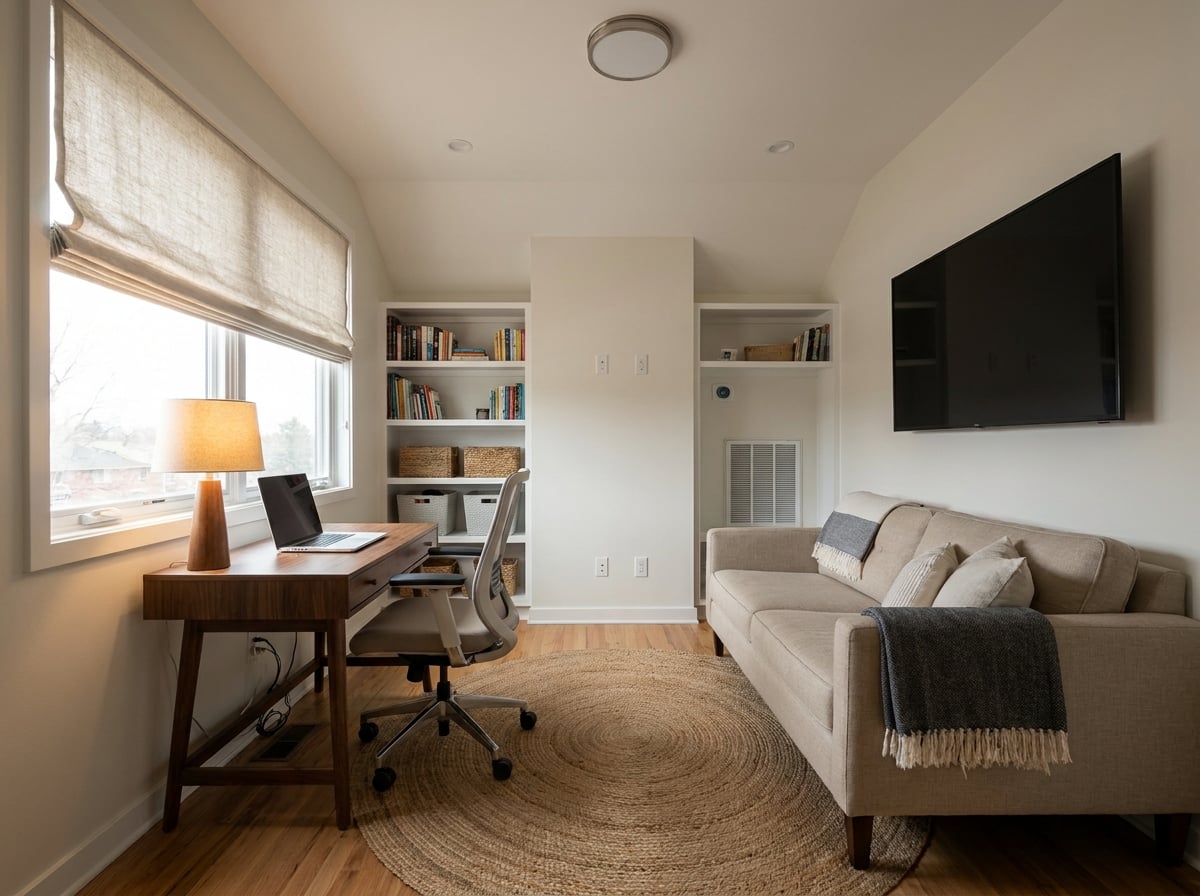
A bonus room is often the most underrated of the three. It has walls. It usually has a door. And it's not already spoken for. That enclosure alone solves the two biggest problems with a loft.
Where bonus rooms differ is location. Some sit above the garage. Some are tucked off a hallway. Some are accessed through a secondary stair. That matters more than the room itself.
Where a Bonus Room Performs Well
A well-positioned bonus room can do both jobs without asking you to compromise too much. Closed door for calls, blackout shades for movies, and because it usually has windows, it doesn't feel like a cave during the day. That matters more than you'd think when you're home full-time.
Denver's older neighborhoods add an interesting wrinkle here. Historic carriage houses in areas like Baker, Curtis Park, and Whittier sometimes get converted into detached workspaces. If you're looking at one, the internet connection and winter access are worth checking closely.
Where a Bonus Room Needs More Scrutiny
Over-garage bonus rooms are the most common version, and temperature control is a real issue. Without dedicated insulation and a proper HVAC supply, these rooms can be genuinely uncomfortable in summer and winter. Ask specifically how the room is heated and cooled. Sloped ceilings are also worth measuring if you're planning to mount a TV or use a standing desk.
How Should Denver Buyers Compare the Three Spaces?
The question isn't which room type wins in theory. It's whether the specific room in this specific house will work for your actual life.
Here's how I walk through it with buyers.
Test a Normal Workday
Sit where the desk would go. Use your phone camera to frame what a call background would look like. Think about whether the room feels usable for the kind of work you actually do, not just whether it photographs well.
Test a Typical Movie Night
Look at where natural light hits the screen wall in the evening. Sit in a few seating positions. Think about whether a TV, a couch, and a desk can coexist without the room feeling impossible to use for both.
Check the Room Systems
Test the Wi-Fi signal in the room, but treat that as a snapshot of the seller's current setup. Also check that there are enough outlets where you'd actually need them, ask whether the room has access to a wired connection, and find out how the space performs in January and July if it has its own thermostat or HVAC zone.
Verify Permits and Future Options
If the space was finished or converted, check whether permits were pulled and inspections completed. Denver buyers can look that up directly through the Denver permit lookup. A polished finish without a permit history is worth flagging with your inspector.
If you're looking at a Denver home and wondering whether the extra room will work for you, send me the listing or floor plan. I'll help you figure out what to look for at the showing.
Frequently Asked Questions
How Can I Verify That a Denver Basement Was Permitted?
Denver allows anyone to search permit records and inspection history by property address at denvergov.org/buildingpermitstatus without an account. If the finish was done without permits, bring it to your inspector and potentially your attorney before closing.
Should I Retest for Radon Before Using a Basement Office?
Yes. The EPA recommends retesting any time occupancy changes on a lower level, and a full-time basement office counts. Radon mitigation is common in Colorado and not a reason to walk away from a home.
Can an Open Loft Be Enclosed After I Buy the Home?
Often yes, but the scope depends on whether the wall touches structure, ventilation, or egress. Get a contractor's read and a rough number before closing, not after.
How Can I Check Internet Service Before Buying a Home?
The FCC's National Broadband Map shows provider availability by address. But availability at the address and actual signal strength in a specific room are different things. Test the room directly during your inspection period.
Can a Bonus Room Become a Legal Bedroom Later?
Possibly, but it depends on egress, square footage, ceiling height, and local requirements. The listing label and current finish don't establish that. Check with the applicable building department for the specific address before counting on it.
Check out this article next