


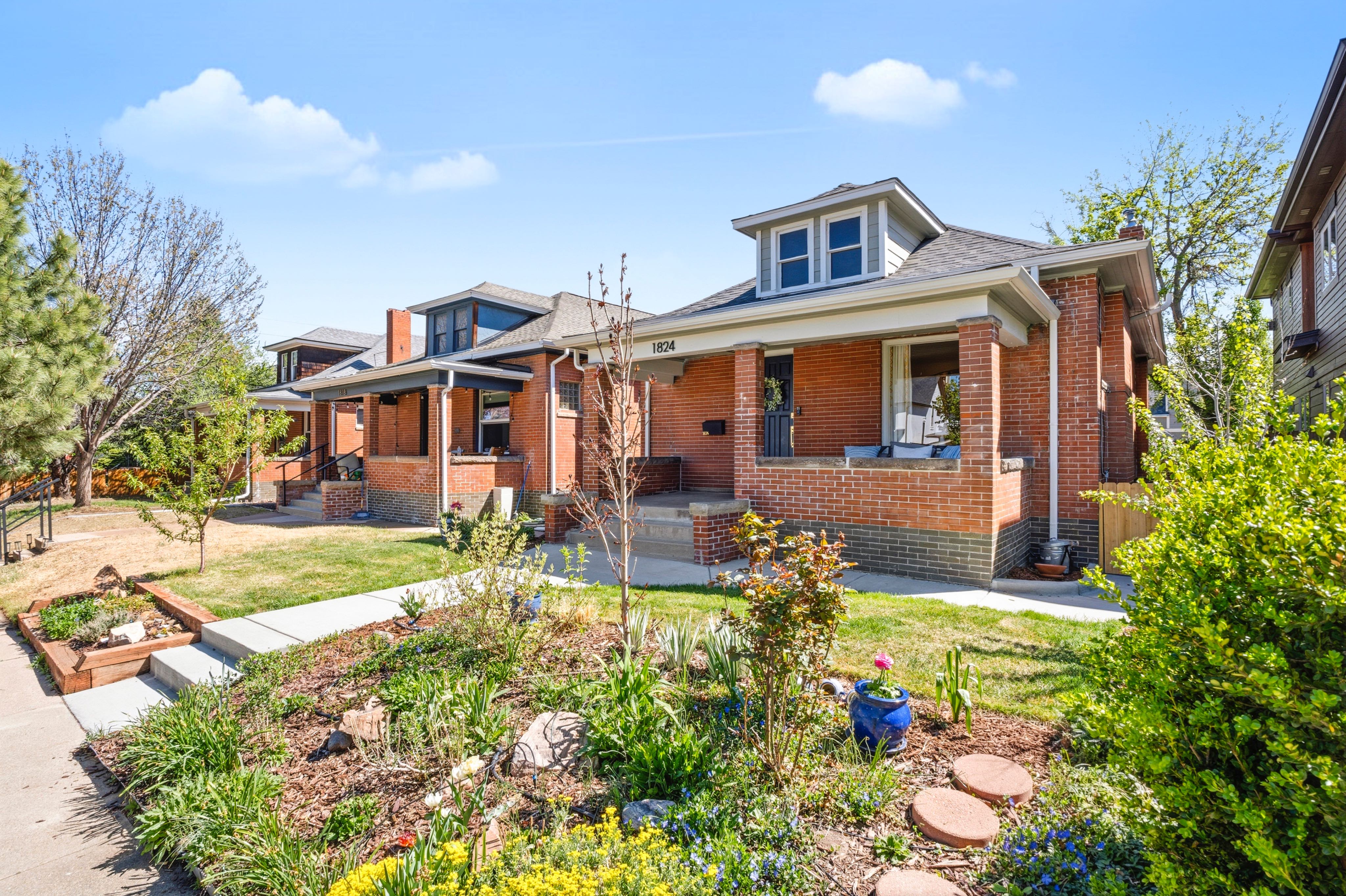
Most people searching for a home in Denver start with the usual filters—square footage, bedroom count, price range—but at some point, something shifts. The numbers stop being enough. What starts to matter more is whether the street feels like somewhere you'd actually want to walk on a Sunday morning, whether the neighbors know each other, whether the block has a history that goes back further than a decade. That's exactly where Denver's historic neighborhoods come in, and why so many buyers find themselves drawn to places like Capitol Hill, Curtis Park, and the Highlands long before they've even seen a listing. These areas weren't built to a formula. They grew over time, and that shows in the wide canopy of mature trees lining the sidewalks, the brick bungalows and Victorian-era architecture that hold up against anything being built today, and the kind of walkable, established streetscapes that newer developments spend millions trying to replicate. Beyond the aesthetics, there's a stronger sense of community identity in these neighborhoods—the kind that takes generations to build and can't be manufactured. This article is designed to help you cut through the noise and get a real feel for what makes Denver's historic areas worth your attention, which ones stand out and why, and how to start matching a neighborhood's character to your own lifestyle. If you've been searching for a place that feels genuinely lived in, the answers are closer than you think.
Why Historic Denver Neighborhoods Still Draw Buyers In
Buyers keep coming back to Denver's historic neighborhoods because these areas offer something modern developments simply cannot replicate—authentic architectural details, established tree canopies, and neighborhoods with genuine soul. It's not nostalgia driving that pull. It's the very real difference between a home that was built with intention and one that was built to a schedule.
The Homes Themselves
Older homes in neighborhoods like Potter-Lawson, Curtis Park, and the Wyman Historic District carry a level of detail that's genuinely hard to find in new construction. Solid brick exteriors that have weathered decades without losing their appeal, wide front porches designed for actual use rather than curb appeal photography, and interior woodwork—built-in shelving, original hardwood floors, hand-carved bannisters—that reflect the craftsmanship standards of their era. No two homes on the same block are identical, which means buyers aren't choosing between variations of the same floor plan. They're choosing a specific home with its own proportions, its own history, and its own set of details that took real skill to produce. That kind of individuality is what makes these properties so hard to walk away from once you've seen them in person.
The Neighborhood Experience
The appeal doesn't stop at the front door. Walkability ranks among the top reasons buyers choose historic Denver areas, and it's easy to understand why once you spend time on these streets. Older lot patterns tend to be narrower and deeper, which creates a denser, more connected block structure where neighbors are close enough to actually interact. The sidewalks lead somewhere useful—independent coffee shops, local bookstores, neighborhood hardware stores, and restaurants that have been operating in the same spot for years. These aren't amenities that were planned into a development; they grew organically alongside the community, and that difference shows.
The street-level character of these neighborhoods also comes from what's above the sidewalk. Mature elm and oak trees that have had 80 or more years to grow create a canopy that changes how a block feels in every season. Neighborhood landmarks—a historic church that anchors a corner, a park that's been a gathering point since the early 1900s, a local market that's been family-owned for generations—give these areas a sense of continuity that newer communities are still working to build. That continuity is what makes a neighborhood feel genuinely lived in rather than recently installed.
Searching for a home in Denver's historic districts means engaging with places that carry real weight—streets where the city's growth is written into the architecture, the lot lines, and the community patterns that have held steady through decades of change. Denver's rich historic neighborhoods are experiencing an unprecedented revival as homebuyers seek character-rich properties that tell a story, and that demand isn't slowing down. Limited supply and growing appreciation for authentic architecture will continue to drive sustained demand, which makes understanding these neighborhoods now a worthwhile investment of your time.
What to Notice When You Explore a Historic Neighborhood in Person
Knowing what makes a historic neighborhood appealing is one thing—walking through it with a clear eye is another. A weekend visit tells you far more than any listing description, and the details worth paying attention to go well beyond the homes themselves.
- How the block is laid out: Older Denver neighborhoods were built on a grid, and that structure changes how a street feels on foot. Narrow lots placed homes closer together and closer to the sidewalk, which creates a rhythm to the block that feels more human in scale. When you walk a street and it feels natural to slow down, that's the layout doing its job.
- What's happening on the sidewalk: Foot traffic on a weekday afternoon, neighbors out on their front steps, kids walking to a nearby school—these are signs that a neighborhood functions as a community rather than just a collection of houses. A quiet block isn't necessarily a bad sign, but a completely empty one at midday is worth noting.
- The tree canopy and front porch presence: Mature trees that arch over the street and deep front porches that face the sidewalk are two of the clearest indicators that a block has aged well. These aren't decorative features—they shape how residents interact with their street and with each other.
- Original architectural details that are still intact: Look at the window trim, the brick coursing, the rooflines, and the front door surrounds. Homes that have kept their original details—rather than replacing them with vinyl or generic updates—hold more of their character and often more of their long-term value. Many of Denver's historic districts benefit from "customized zoning provisions that will encourage continuity and the preservation of the neighborhood's character," which means what you see on a well-preserved block today is likely to stay that way.
- How homes relate to each other: A block where homes share a similar setback, scale, and material palette feels cohesive. When one property has been dramatically altered or a new build sits out of proportion with everything around it, it disrupts that continuity. Pay attention to whether the block reads as a whole.
- Daily-use destinations within walking distance: A coffee shop two blocks away, a neighborhood park with actual foot traffic, a corner market that's been operating for years—these are the places that make a neighborhood livable day to day, not just photogenic on a Saturday morning.
- Parking, traffic, and ease of getting around: Drive through at different times of day. Notice whether street parking is consistently available, how cut-through traffic behaves on residential streets, and how long it takes to reach a main corridor on foot.
- Renovation quality across the block: A well-maintained older home is different from one that's been cheaply updated. Look at how additions were handled, whether lot sizes give homes room to breathe, and whether the overall maintenance level reflects a neighborhood people are invested in.
Matching a neighborhood to your life means being honest about what your daily routine actually looks like—not just what you hope it will look like. The most written-about Denver neighborhoods aren't automatically the right fit, and a less prominent block that puts a park, a good school, and a reliable coffee shop within easy reach may inspire more genuine satisfaction than a famous address that doesn't quite fit how you live.
Six Denver neighborhoods worth exploring first
Not every buyer wants the same kind of history—some are drawn to the raw industrial bones of a city's earliest blocks, while others want a residential street that feels like it's barely changed in a century. These six neighborhoods give you a practical range of what historic Denver actually looks like on the ground, each with its own identity and its own type of buyer who tends to feel most at home there.
LoDo—short for Lower Downtown—is where Denver's story begins. The neighborhood sits on the original townsite platted in 1858, and that age shows in the dense rows of Italianate and Romanesque brick warehouses that line its streets. Many of those buildings have been converted into lofts, restaurants, and offices, which gives LoDo a dual quality—you're standing inside a 19th-century structure while living a very current urban life. Buyers who want that combination of genuine historic fabric and city-center energy tend to find LoDo hard to walk away from.
Capitol Hill earns its reputation through sheer density of character. The Colorado State Capitol anchors the western edge, and radiating outward from it are blocks of older apartment buildings, stately brick homes, and tree-lined streets that reward walking over driving. This is one of Denver's most walkable areas, where daily errands rarely require a car. Buyers who want to live inside the city rather than adjacent to it—and who appreciate the kind of urban texture that only decades of layered development can produce—tend to gravitate here.
Baker holds onto its Victorian-era roots more visibly than almost any other Denver neighborhood. The homes here—many dating to the late 1800s and early 1900s—still have their original front porches, decorative trim, and consistent setbacks that give the blocks a cohesive, unhurried feel. Baker sits just south of downtown, close enough to reach the city's core easily but residential enough to feel like a genuine neighborhood. It suits buyers who want architectural continuity without sacrificing access to everyday amenities.
Five Points carries more than just architectural history. Once known as the "Harlem of the West," the neighborhood was the cultural and social center of Denver's African American community for much of the 20th century, home to jazz clubs that drew national acts and a business district that served a community largely excluded from other parts of the city. That legacy is woven into the identity of Five Points in a way that goes well beyond building styles, making it especially meaningful for buyers who want a home in a place with a real and significant story.
Highlands has a layered quality that comes from its unusual origin—it was an independent city before being annexed by Denver in 1896. That history produced multiple distinct historic districts within a single neighborhood, with housing that ranges from modest cottages to larger craftsman homes, all set against a backdrop of local shops and long-standing restaurants.
Park Hill trades density for space. Lots here run larger than in most of Denver's inner neighborhoods, and the tree canopy—established over more than a century—gives the streets a quieter, more expansive feel that buyers seeking room to breathe tend to find genuinely inspiring.
Matching yourself to a historic neighborhood means being honest about which type of character actually fits your daily routine—prestige and name recognition matter far less than whether the streets, the scale, and the community feel like somewhere you'd genuinely want to spend your time.
How to Match Neighborhood Charm with the Life You Want to Live
Knowing which historic Denver neighborhoods exist is a good starting point, but the more useful question is which one actually fits how you spend your days. The architecture, the block layout, the proximity to parks or transit—these details only matter if they line up with what your routine genuinely requires.
Urban, Walkable, and Socially Active
LoDo and Capitol Hill are the right fit for buyers who want their neighborhood to do a lot of the heavy lifting in daily life. In LoDo, converted brick warehouses sit steps away from restaurants, coffee shops, and transit lines, which means a car stays parked for most of the week. Capitol Hill adds a different texture—denser residential blocks, independent businesses woven into the streetscape, and a social energy that comes from a neighborhood where people are constantly out and moving. Both areas reward buyers who prefer walking to an errand over driving to one, and who find that city activity around them feels motivating rather than draining.
Historic Character with Culture and Identity
Baker and Five Points appeal to buyers who want their home to sit inside a neighborhood with genuine depth. Baker, which was "first plotted and developed in the 1870s," carries that history in its preserved Victorian homes and walkable blocks. It includes Broadway's Main Street, which offers a variety of shopping, casual and fine dining, and entertainment options—and it's more walkable than much of Denver. Five Points brings a different kind of significance — as the historic cultural center of Denver's African American community, the neighborhood carries an identity that goes well beyond its architecture. Buyers drawn to these areas tend to want a home that connects them to a place with a real story, not just a well-preserved streetscape.
More Space, Quieter Streets, and a Slower Pace
Park Hill suits buyers who want historic character without the density that comes with inner-city living. Lots here run larger than in most of Denver's older neighborhoods, and the residential blocks are quieter—less foot traffic, more mature trees, and a pace that feels noticeably different from LoDo or Capitol Hill. The neighborhood's established feel comes from more than a century of continuous residential use, and that shows in the way the streets hold together. Buyers who want room to breathe while still living in a neighborhood with genuine roots tend to find Park Hill genuinely inspiring.
Thinking through your actual routine—how you get to work, how often you want to walk to dinner versus drive, whether you recharge in busy environments or quieter ones, and how much outdoor access matters on a weekday—narrows the field faster than any other filter. Commute style alone can rule out or confirm entire parts of the city.
Filtering by lifestyle rather than appearance takes a search that can feel scattered and gives it a clear direction—one that's shaped by your priorities rather than a list of features.
Why Denver Feels Like a Patchwork of Distinct Places
Denver doesn't operate as a single housing market—it operates as 78 of them. That number isn't just an administrative detail. It's the most practical way to understand why crossing a few blocks in this city can feel like stepping into an entirely different community, with different architecture, different street patterns, and a different sense of what daily life looks like.
- The 78-neighborhood framework that Denver uses to organize its communities reflects something real about how the city was actually built. Each statistical neighborhood has its own development history, its own dominant housing type, and its own relationship to the streets around it. Some are dense and walkable, others are quieter and more residential, and a few carry the bones of commercial corridors that predate the automobile. Treating Denver as one market means missing the fact that a buyer searching in Sunnyside and a buyer searching in Montclair are making fundamentally different decisions, even if the price points overlap.
- Long-term research tracking how Denver's neighborhoods changed between 1940 and 2016 shows that the city's identity didn't arrive all at once. Growth came in distinct waves—postwar expansion, urban renewal, preservation movements, and more recent reinvestment cycles—and each wave left a different imprint on different parts of the city. The Discover Denver survey, a city-produced initiative, documents the city's individual buildings, the histories of its neighborhoods, and the stories important to its communities, which makes it one of the most detailed records of how Denver's built environment shifted across those decades.
- Transit lines, city planning decisions, historic preservation efforts, and targeted redevelopment each pushed Denver's neighborhoods in different directions. Curtis Park, one of the city's oldest residential areas, grew as a streetcar suburb in the late 1800s—its narrow lots and front-facing homes were designed around pedestrian movement rather than car access. Capitol Hill developed as a civic and cultural anchor, drawing larger homes and apartment buildings that reflected its proximity to the state capitol. Five Points took shape as a self-contained community, its commercial and social infrastructure built largely in response to the segregation that kept its residents out of other parts of the city. Three neighborhoods, three completely different formation stories.
- That last point about Five Points connects to a harder part of Denver's history. Redlining—the federal-era practice of denying mortgage access and investment to predominantly Black and immigrant neighborhoods—shaped which parts of the city received infrastructure, maintenance, and reinvestment, and which ones didn't. The City and County of Denver's historic context series is focused on documenting the history of historically excluded communities from throughout Denver's history, which reflects how seriously that legacy is now being examined. Neighborhoods that were systematically disinvested for decades carry that history in their built fabric, and understanding it changes how you read what you see on the street.
Knowing this history gives buyers a more accurate lens for what they're actually evaluating when they walk a block—not just the architecture, but the decisions, policies, and community responses that produced it.
No source link or source content summary was provided, so no external linking can be added.
How to Research a Neighborhood Before You Fall in Love with a Home
Falling for a specific house before understanding the neighborhood around it is one of the most common mistakes buyers make. The home might check every box, but if the surrounding blocks don't match what you're actually looking for in daily life, that initial excitement fades fast. Doing neighborhood research before you start touring homes gives you a foundation that makes every visit more purposeful—and helps you recognize the right fit when you find it.
Denver Public Library Neighborhood History Guides
The Denver Public Library's Western History and Genealogy collection holds one of the most detailed records of how Denver's neighborhoods actually developed. Their neighborhood history guides pull together historical maps, archival photographs, and written narratives that trace how specific areas changed over decades—which streets were built first, how the housing stock shifted, and what community institutions shaped the area's identity. Spending time with these guides before you tour a neighborhood gives you a completely different frame for what you're looking at. A block of craftsman bungalows in Sunnyside reads differently when you know it was built for working-class families in the early 1900s than it does when you encounter it cold through a listing photo.
City and County of Denver Neighborhood Data Dashboard
Listing descriptions are written to sell homes, not to give buyers an accurate picture of the surrounding area. The City and County of Denver Neighborhood Data Dashboard exists for exactly that reason—it pulls together verified statistics on population, housing, land use, and planning context for each of Denver's 78 statistical neighborhoods. You can confirm actual neighborhood boundaries, which matter more than most buyers realize since a home listed as being in one neighborhood can sit right on the edge of another with a completely different character. The dashboard also reflects current planning activity, which tells you whether the area around a property is stable, under review, or in the middle of a rezoning process that could change what gets built nearby.
Historic Denver and Archival Research
Historic Denver is a nonprofit organization dedicated to preservation advocacy and education, and their resources go well beyond what most buyers think to look for. Their work includes archival research that documents which properties and districts carry formal historic designation, what protections apply to them, and how preservation decisions have shaped specific blocks over time. This matters practically—a home marketed as sitting in a "historic neighborhood" may or may not have any actual designation behind that claim, and Historic Denver's resources help you test that language against the record. Knowing whether a property sits within a designated historic district affects everything from renovation permitting to long-term property character.
Pulling current listings alongside that historical research gives you a sharper eye for what you're actually evaluating during a showing. A home that's been renovated in a way that strips out its original details—replacing wood windows with vinyl, covering original hardwood with laminate—tells a different story than one where the updates respected what was already there. The research you do ahead of time is what helps you tell the difference and decide whether a specific home still carries the character that inspired you to search in that neighborhood in the first place.
Final Thoughts
Historic Denver neighborhoods offer something that newer developments rarely can—a genuine sense of place. The craftsmanship in the homes, the mature trees lining the sidewalks, the local coffee shops that have been around for decades—these details add up to a daily life that feels grounded and real rather than assembled from a catalog.
What this article aimed to do was give you a clearer way of reading a neighborhood before you commit to one. Knowing what to look for on the street—the scale of the homes, the condition of the sidewalks, how people actually use the public spaces—helps you move past surface-level impressions and get a better feel for whether a place fits the life you want to build.
Denver's historic neighborhoods each carry their own rhythm. Curtis Park feels different from Potter-Highlands, and Washington Park feels different from both. None of them are universally better than the others. The right one is the one where the architecture, the pace, and the everyday routine start to feel familiar before you've even moved in.
So take what you've read here and use it as a starting point. Walk the blocks you're drawn to on a weekday morning and again on a weekend afternoon. Talk to people who live there. Pay attention to what the neighborhood asks of you and what it gives back. The best historic neighborhood for you isn't the most talked-about one—it's the one whose story starts to feel like yours.
If you're considering a move to one of Denver's historic neighborhoods, I'd be happy to help you explore the areas that best fit your lifestyle, priorities, and long-term goals. Whether you're relocating, rightsizing, or searching for a home with character and history, let's start the conversation.
FAQs
What are the best historic neighborhoods in Denver?
Some of Denver's most popular historic neighborhoods include LoDo, Capitol Hill, Baker, Five Points, Highlands, and Park Hill. Each offers a unique mix of architecture, walkability, community character, and local amenities.
Are historic homes in Denver a good investment?
Historic homes can be a strong long-term investment because of their architectural character, limited supply, and desirable locations. Buyers are often drawn to original details, established neighborhoods, and the unique charm that historic properties provide.
What should I look for when buying a historic home in Denver?
When evaluating a historic home, pay attention to the condition of major systems such as plumbing, electrical, roofing, and HVAC. It's also helpful to understand whether the property is located within a designated historic district, as that may affect renovation and preservation requirements.
Which Denver neighborhood is best for walkability?
Neighborhoods such as Capitol Hill, LoDo, and Baker are known for their walkability, offering easy access to restaurants, coffee shops, parks, entertainment, and daily conveniences.
Are there historic neighborhoods in Denver that offer larger lots?
Yes. Neighborhoods such as Park Hill are known for larger lots, mature landscaping, and a quieter residential atmosphere while still providing convenient access to the city.
How do I choose the right Denver neighborhood for my lifestyle?
The best neighborhood depends on your priorities. Consider factors such as commute times, walkability, access to parks, housing style, community atmosphere, and proximity to the amenities you use most often. Working with a local real estate professional can help you identify neighborhoods that align with your goals and lifestyle.
Is it more expensive to maintain a historic home?
Maintenance costs can sometimes be higher because older homes may require specialized repairs or restoration of original features. However, many homeowners find the craftsmanship, character, and long-term appeal of historic homes well worth the additional upkeep.
Check out this article next