

Welcome to

Washington Park

Washington Park Homes for Sale — A Local's Guide to Wash Park

Denver has neighborhoods that photograph well and neighborhoods that live well. Washington Park is one of the few that does both, which is why it has been on every list of the city’s best places to live for as long as anyone has been making those lists.

Everyone here calls it Wash Park. You may as well start now.
Current Population
0

Discover Washington Park

A Neighborhood Built Around A Park

In 1898 Denver's civic leaders decided the city needed a great public park to rival Central Park, and handed 165 acres on the south side to landscape designer Reinhard Schuetze. What he built is still the reason people move here: twin lakes, formal flower gardens modelled on George Washington's Mount Vernon estate, a historic boathouse, and 2.6 miles of car-free loops.

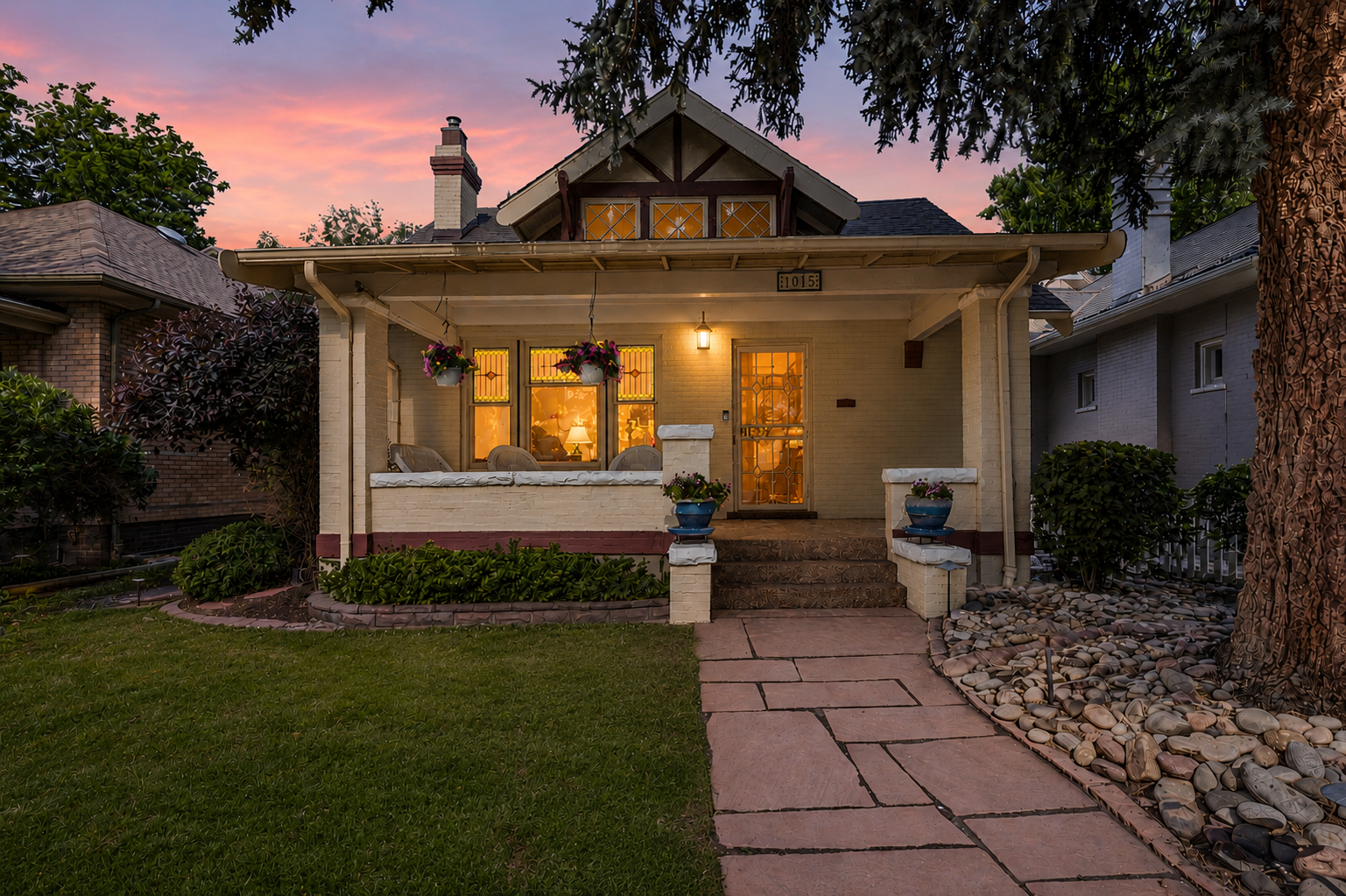
The neighborhoods that grew around it — Wash Park East and Wash Park West — filled in between 1920 and 1940, when Denver's prosperous middle class built brick bungalows, Tudor revivals and Colonials along evenly gridded streets. That single wave of construction gave the area an architectural coherence it still has, and which residents defend with some energy.

On any given morning the park holds runners, cyclists, dog walkers, rowers, yoga classes and people doing nothing at all. The outer loop is gravel for runners and walkers; the inner loop is paved and split into dedicated lanes for cyclists and pedestrians. The Cherry Creek Bike Path runs straight through the neighborhood, connecting 40 miles of paved trail to downtown, Cherry Creek and the wider metro without touching a road.

Get Market Report

The Housing Stock, Honestly

Most of what you will look at was built between the wars. Brick bungalows, Tudors, Denver Squares, Colonial revivals — solid, characterful, and small by modern standards. Original floor plans tend to mean compact kitchens, modest closets, and bathrooms in places that made sense in 1932.

A great many have been renovated, and the quality varies enormously. Some are beautifully done pop-tops that respect the original roofline. Others are additions that fought the house and lost. A meaningful number of lots have been scraped entirely and rebuilt as new luxury construction, which is a live subject of neighborhood conversation and not a universally popular one.

Practical things worth knowing before you fall for a listing photograph. Lots are generally modest, and many original homes have detached garages off the alley or no garage at all. Renovating here frequently means electrical, and sometimes the sewer line. Basements vary from finished living space to something you use for storage and nothing else. Which block you are on matters — proximity to the park, to Gaylord, to Pearl, and to Downing all move the number.

I walk clients through this in person, because the difference between a renovation that was done properly and one that merely looks done is not visible in photographs.

What It Costs

Broadly, Wash Park runs from around $900,000 for an original or lightly updated bungalow to $3 million and beyond for new construction and large renovated homes near the park.

The premium here is for location and character rather than square footage. You will pay more per foot than in most of Denver and receive less space than an equivalent budget buys further out. People pay it knowingly, because the park, the walkability and the architecture are not things that can be built somewhere else. Values have held up notably well through several market cycles, which is a reasonable part of the case for buying here.

$0
0
0
0

Who it suits — and who it does not

Wash Park is exceptional for people who want to live outdoors without leaving the city, who value walkability genuinely rather than theoretically, and who want architectural character over new-build convenience. Young professionals, established families and downsizers coming from larger suburban homes all do well here.

It is not the right neighborhood for everyone, and I would rather say so early.

If you want a large lot, a three-car garage or a flat modern floor plan, your money goes considerably further south and east. If you need single-level living, it is a genuine constraint — the housing stock is predominantly two-story with basements, and level-entry homes are scarce and priced accordingly. If summer crowds bother you, know that the park draws thousands on a warm weekend and parking near it is competitive. And if you want turnkey new construction, inventory is limited and moves quickly.

None of this makes Wash Park a lesser neighborhood. It makes it a specific one.

Getting Around

Downtown is about six miles, which is fifteen to twenty-five minutes driving depending on the hour. The Louisiana-Pearl light rail station sits in the neighborhood and runs directly to downtown, Union Station and the airport line — one of the better-connected residential stations in the city. The airport is roughly forty minutes by car outside peak times.

The walkability is real rather than a score. Most homes are within a genuine walk of the park and of either South Gaylord or South Pearl. Day-to-day errands are walkable; a full grocery run generally is not.

wash park

Schools In Wash Park

Washington Park is served by Denver Public Schools, with several well-regarded schools within walking distance. Steele Elementary (PK–5) and Lincoln Elementary serve the neighborhood, Merrill Middle School covers grades 6–8 with roughly 600 students, and South High School offers a full International Baccalaureate Programme to about 1,700 students.

DPS operates a choice enrollment system, so assigned schools are the starting point rather than the whole answer — worth understanding early if schools are driving your search.

Private options are unusually strong nearby: St. Mary's Academy, Graland Country Day School, Kent Denver, Denver Academy, and Denver International School are all within a short drive.

Where People Actually Go

Two commercial corridors anchor the neighborhood, one on each side of the park, and they have genuinely different personalities.

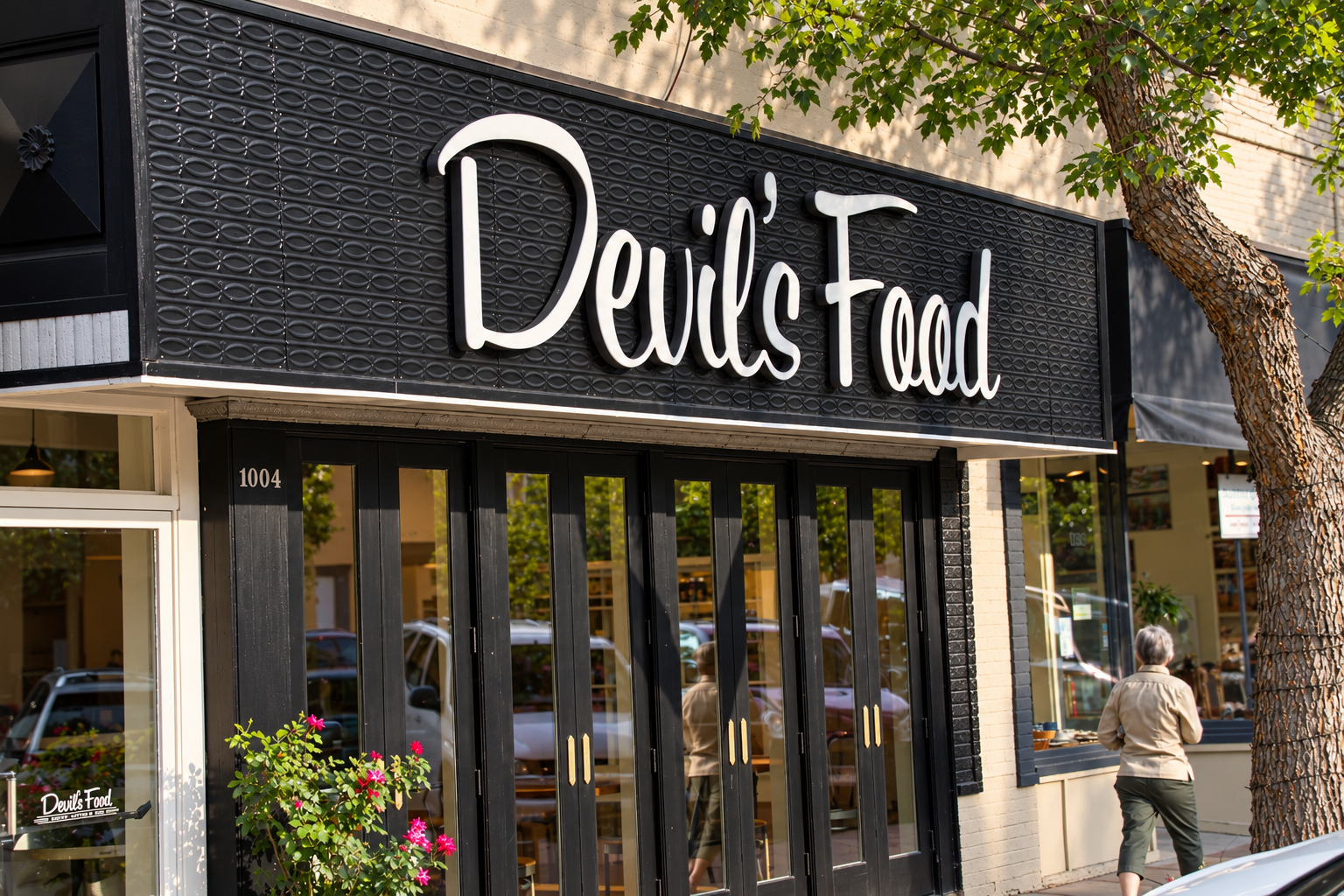
Old South Gaylord Street, on the east side, is Denver’s second-oldest shopping district — nineteenth-century facades, independent restaurants, wine bars and galleries. Devil’s Food Bakery has been the neighborhood’s morning anchor since 1999, with lines out the door by nine on weekends. Homegrown Tap & Dough serves wood-fired pizza from vintage ski chairs and gondolas. Restaurant Olivia handles the serious evenings with Italian and French cooking and a properly built wine list.

South Pearl Street, on the west, was Denver’s first trolley route and is now one of its most eclectic corridors — independent boutiques, art galleries, craft breweries. Sushi Den has been there since 1984, flying fish in daily from Kyushu’s Shimonoseki market, and is still the best sushi in the Rocky Mountain region by most reckonings. The farmers market runs weekly through summer.

The Newman Center for the Performing Arts at the University of Denver, five minutes south, programmes over 500 events a year.
The Year in Wash Park

The South Gaylord Street Day Block Party over Memorial Day weekend is the unofficial start of summer. The Colorado Dragon Boat Festival races on Smith Lake and is one of the largest Asian cultural festivals in the Rocky Mountain region. Oktoberfest returns to Gaylord in September, as does the Wash Park Home Tour, which opens some of the neighborhood's best architecture to the public — the single most useful afternoon a prospective buyer can spend here. Winterfest closes the year with chestnuts, carriage rides and carollers.

Thinking of buying or selling in Wash Park?

Washington Park has a mix of historic homes, updated properties, duplexes and newer construction. If you’re looking to buy, I can help you understand what’s available, what different parts of the neighborhood offer, and how a property fits within the broader Denver market.

For longtime homeowners, the conversation can be different. Stairs that were nothing at forty may be a consideration at seventy-five. Maintenance on a hundred-year-old home can become less appealing, and the equity you’ve built may open up new possibilities. Some of my clients have moved to single-level homes in Greenwood Village, Lone Tree or Highlands Ranch while keeping the life they love, minus the roof.

There’s no one right time to make a move, and there’s no need to rush the conversation. Whether you’re looking for your next home or considering what comes after Washington Park, I can help you understand your options and make a plan that fits your life.

Talk to me about Washington Park
twilights

Free market report

Want the full market report for Washington Park?

We want to ensure that you have all the information needed to make the best decisions when it comes to your home goals. When you enter your info in the form you will get instant access to the area's latest market report, complete with sales and demographic trends.

$0
0
0/0

Washington Park

Complete the form for the latest market report.

Frequently Asked Questions

Read all FAQs

Washington Park is consistently ranked among Denver's best neighborhoods for walkability, architecture and access to green space. It is built around a 165-acre park with twin lakes and car-free trail loops, sits roughly six miles from downtown with direct light rail access, and is served by well-regarded Denver Public Schools. It suits buyers who value character and walkability over lot size and new construction.

Washington Park homes generally range from around $900,000 for an original or lightly updated bungalow to $3 million and above for new construction and large renovated homes near the park. Price per square foot runs higher than most of Denver, reflecting the location and the architecture rather than the size of the house.

The park divides them, and each has its own commercial corridor. Wash Park East sits toward Old South Gaylord Street, Denver's second-oldest shopping district. Wash Park West sits toward South Pearl Street, the city's first trolley route and now a corridor of independent boutiques, galleries and restaurants. Both share the same architectural era and the same park; the difference is which street becomes your everyday one.

Washington Park is served by Denver Public Schools, including Steele Elementary and Lincoln Elementary, Merrill Middle School, and South High School, which offers an International Baccalaureate Programme. DPS operates choice enrollment, so assigned schools are a starting point. Private options nearby include St. Mary's Academy, Graland Country Day School and Kent Denver.

Yes, genuinely. Most homes are within walking distance of the park and of either South Gaylord Street or South Pearl Street, both of which have restaurants, cafes and independent retail. The Louisiana-Pearl light rail station serves the neighborhood directly. Daily errands and dining are walkable; a full grocery run usually involves a car.